
There are always two numbers in the specs for a car or motorcycle: CC and horsepower. You can learn something about the engine from both of them, but they measure different things. Many people believe that a higher CC number means more power, but this isn’t always the case. This guide will explain what CC and horsepower really mean, how they are related, and which one you should pay attention to when you are looking for a car.
CC and horsepower: Understanding the Basics
First, let’s look at the simple meanings of these two words.
What does CC mean?
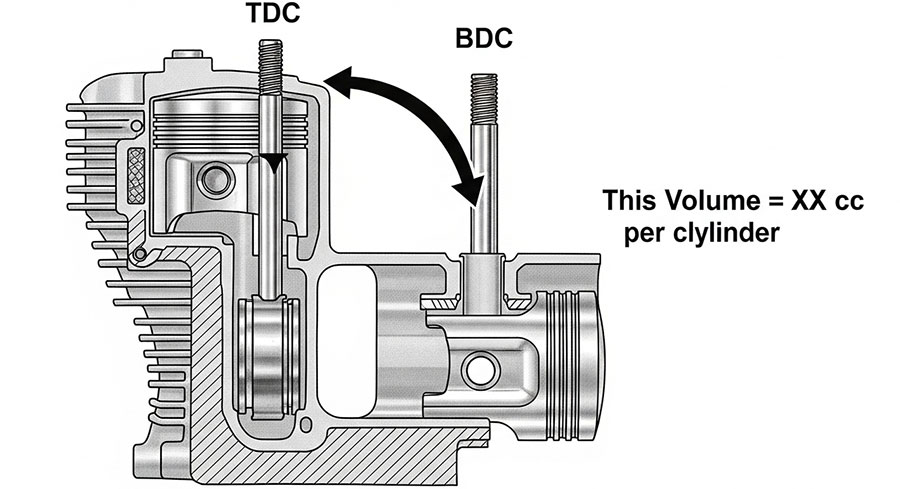
CC is short for cubic centimeters. It tells you how big your engine is, specifically how much space it takes up. You could say it’s like the engine’s “lung capacity.”
This is a simple way to think about it: The pistons in your engine move up and down in cylinders. The CC number tells you how much air and fuel the pistons can suck in when they move from the top to the bottom. A 2000 cc engine can hold more of this mix than a 1000 cc engine.
- Important Point: CC doesn’t tell you how powerful the engine is, only how big it is.
What does horsepower mean?
Horsepower is a way to measure power, or how much work an engine can do over time. In short, it tells you how powerful and quick the engine is. In general, a car with more horsepower can go faster and reach a higher top speed.
But there’s a twist. You need to know about torque to really understand horsepower.
- Torque is the engine’s raw twisting force, which is the first “push” you feel when you hit the gas.
- Horsepower is how quickly the engine can use that torque to keep you going.
Torque is how hard you turn the wrench, and horsepower is how fast you can turn it. Engines make horsepower by combining speed (RPMs) with torque.
The Most Important Difference: Size vs. Performance
This is the main idea. CC and horsepower are two different things that describe an engine.
CC Measures Engine Capacity
CC is about how much room there is. It doesn’t change because of the number of cylinders, the distance the pistons move, and the diameter of the cylinders. The CC of an engine doesn’t change after it is built. It’s a measure of potential; in theory, a bigger space can cause a bigger explosion.
Horsepower Measures Engine Output
Horsepower is all about getting things done. This is the last test to see how well an engine turns fuel into usable power. You can change this number. Engineers can boost horsepower without changing the CC by making the engine breathe, burn fuel, and handle heat more efficiently.
How CC and horsepower are connected (and why it’s not easy)
A bigger engine (with more CC) can make more power because it can burn more gas. But making that potential into real horsepower depends on a lot of smart engineering decisions.
Key Factors That Break the Simple Link
- Superchargers and turbochargers: These are like “power fans” that push more air into the engine. A 2.0-liter (2000 cc) turbocharged engine can often make more horsepower than a 3.0-liter engine without a turbo.
- Technology: New features like variable valve timing and direct injection help engines breathe better and burn fuel more efficiently, getting more power out of every drop of fuel.
- High RPMs: Some engines, like those in sportbikes, are made to spin very quickly (high RPMs). A smaller, high-revving engine can do better than a bigger, slower one because horsepower is linked to RPM.
Comparison in the Real World
Here is a table that shows why you can’t guess horsepower just by looking at CC:
| Vehicle Example | Tamaño del motor (CC) | Horsepower (HP) | Reason |
|---|---|---|---|
| Typical Mid-Size Sedan | 2500cc | ~180 HP | Modern, efficient design. |
| Performance Sedan | 2000cc | ~300 HP | Uses a turbocharger for big power. |
| Large Cruiser Motorcycle | 1800cc | ~80 HP | Construido para el par de gama baja, no las altas Rpm. |
| El Deporte De La Motocicleta | 1000cc | ~200 HP | Construido a rev extremadamente alta. |

What matters to you: CC or horsepower?
Así que, ¿qué número debe prestar atención a la hora de comprar un coche? Todo depende de lo que usted necesita.
When CC Is More Important
Preste atención a CC si:
- Usted tiene una cantidad limitada de dinero: En un montón de lugares, el tamaño del motor determina cuánto camino de impuestos que tiene que pagar.
- Quieres saber cuánto gas de su coche uso: Un motor de menor (inferior CC) generalmente se utiliza menos gas al coche todos los días, pero esto no es siempre cierto (ver mitos más abajo).
- Usted necesita bajo nivel: un motor con un mayor CC generalmente hace que sea más fácil de obtener fuertes, utilizable par a bajas velocidades, lo cual es útil para remolcar un remolque o transporte de cargas pesadas.
When Horsepower Is More Important
Preste atención a los caballos de fuerza si:
- Que el amor de rendimiento: es la mejor manera de adivinar cómo de rápido que un coche puede ir y qué tan rápido se puede ir.
- Conducir en las carreteras de mucho, así que tener más caballos de fuerza hace que sea más seguro y más fácil de pasar a otros coches y se funden en el tráfico rápido.
- You want a fun, responsive ride. More horsepower usually means a more exciting driving experience.
3 Common Myths That Aren’t True
Vamos a aclarar algunos de los malentendidos comunes.
- Mito 1: "no Hay una manera fácil de cambiar CC de HP."
Hecho: no Hay fiable de la fórmula. Con las nuevas tecnologías, viejas reglas como "cada 100cc hace 10 caballos de fuerza" no son verdad. Dependiendo de cómo está construido, un motor de 1000cc puede hacer 50 HP a 200 HP. - Mito 2: "el más grande de CC siempre significa peor kilometraje de gas."
Hecho: la Tecnología cambia las reglas. Un pequeño motor turbo podría empeorar el millaje de gas en la carretera de un grande, no turbo-motor porque tiene que trabajar más duro. Compruebe el mundo real MPG calificaciones de cada momento. - Mito 3: "la Potencia es la única cosa que hace que un coche ir rápido".
También es importante lo mucho que el coche pesa! Un coche con 200 CV que es la luz puede ir mucho más rápido que un SUV con más de 300 CV, que es pesado. La transmisión y los neumáticos también son muy importantes.
Conclusión
Así que, ¿cuál es la diferencia? CC es acerca de lo grande que es el motor, caballos de fuerza y es acerca de lo bien que funciona. Un motor más grande puede dar más potencia, pero la ingeniería inteligente puede hacer un pequeño motor de ganar la carrera.
No sólo se centran en un número cuando usted está comparando los coches. Para el rendimiento, la verificación de los caballos de fuerza; para el general de los gastos de funcionamiento, compruebe el CC; y siempre recuerde lo importante que par es para que la satisfacción de empujar fuera de la línea. La mejor elección es saber cómo todos estos elementos trabajan juntos.
Preguntas frecuentes
Q: ¿Puede usted aumentar su motor de CC?
R: Sí, a través de un proceso llamado "aburrido", donde los cilindros se hizo más amplia. Esta es una de las principales caras de la modificación generalmente realizada por los especialistas, no una simple actualización.
Q: ¿Cómo puedo aumentar la potencia sin cambiar el CC?
R: mejoras incluyen la mejora del flujo de aire (con una nueva entrada de aire o el sistema de escape), la optimización del motor de la computadora (ECU), o la adición de un turbocompresor.
Q: Es el mayor motor de CC mas confiable?
R: No necesariamente. Un simple, de aspiración natural del motor (no turbo) a menudo es menos complejo y puede ser muy fiable. Un pequeño, muy estresado por el motor turbo con un montón de piezas complejas podría tener más puntos potenciales de falla.
P: ¿Qué es un "buen" número de caballos de fuerza?
R: Es todo acerca de equilibrio para sus necesidades. Un coche compacto con 130-150 CV es generalmente grande para la ciudad. La mayoría de la familia berlinas y Suv sentirse confiado con 180-250 HP. Por cierto rendimiento, los conductores a menudo busca de 300 HP y superiores.
 Spanish
  English
  Russian
  Portuguese
  French